


For the Right to Live
By Jaime Caichoca, CORIDUP & Jean Norris, Presbytery of San Francisco Joining Hands
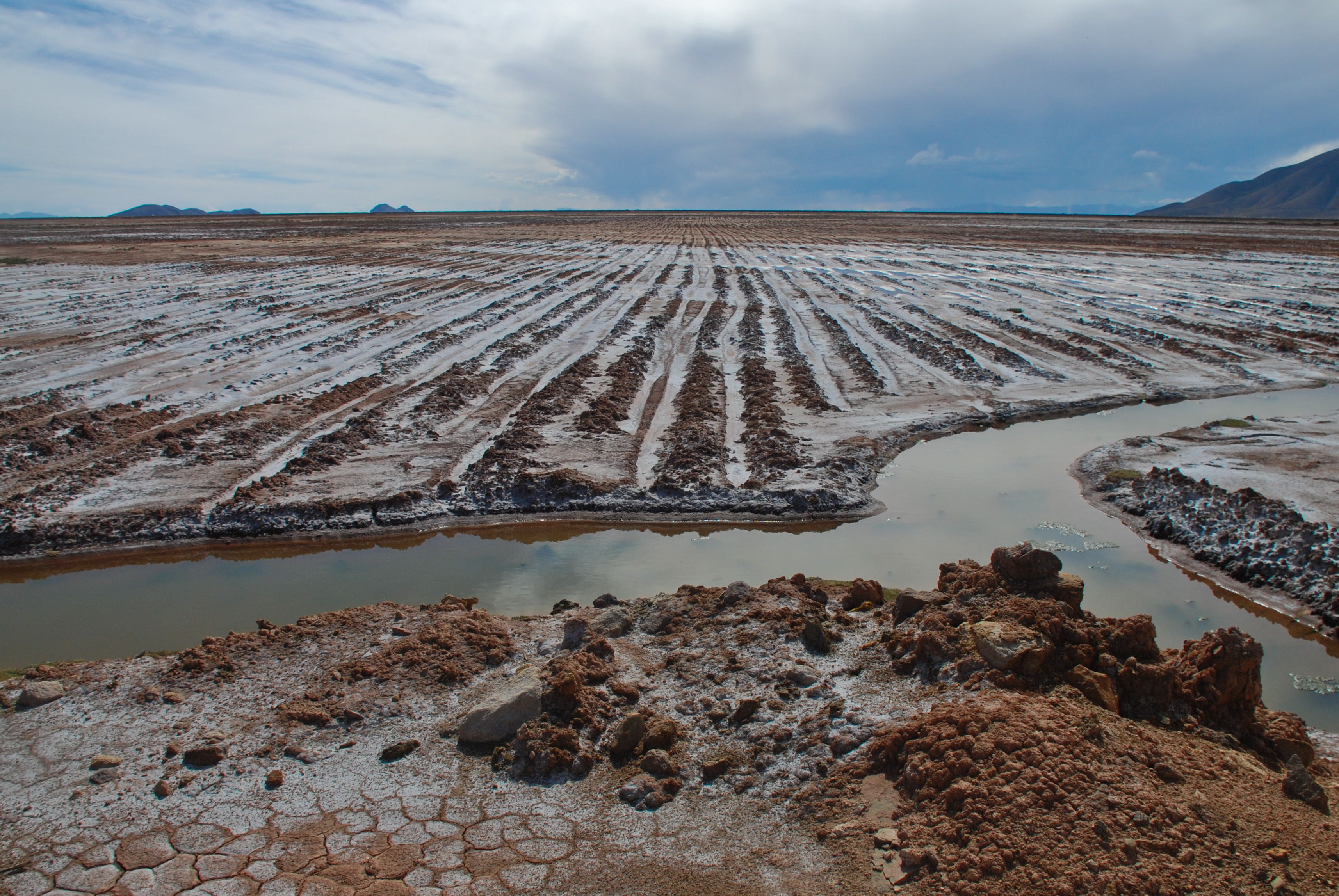
Near the village of Toma Toma in 2009, where once livestock grazed on this land, now animals are deformed and the land has become worthless due to salinization. Photo Courtesy of Joining Hands Presbyteries of San Francisco and Cascades.
Since the year 2000, more than 80 rural communities from 3 indigenous groups have organized themselves to take action against environmental contamination, principally from mining operations that work irresponsibly in the state of Oruro, Bolivia. These communities have suffered from high environmental degradation mostly from mining contamination, violations and non-compliance with environmental law by mine operators, and unwillingness of the Environmental Authorities to control these activities.
Two leaders of the organization CORIDUP (Coordinator in Defense of the Desaguadero River Basin and the Uru Uru and Poopó Lakes), are sons of the first organizers of this environmental justice struggle. Throughout its formation and development, CORIDUP received support from institutions dedicated to improving the human rights and environmental situation in Bolivia. One of these was their social ally, CEPA (Center for Ecology and Andean People), an environmental justice NGO based in Oruro, as well as a member organization of UMAVIDA (Joining Hands for Life) Network. Through UMAVIDA, the Joining Hands presbyteries of San Francisco and Cascades have worked to understand the impact of the Kori Kollo gold mine on the surrounding communities of CEPA and CORIDUP.
With expert help from Earthjustice, an environmental law firm in San Francisco, and AIDA, Interamerican Association in Defense of the Environment, partners from the North and South have begun to understand the impact of this environmental catastrophe on Human Rights to water, livelihood, health, and culture. A United Nations (U.N.) Human Rights Council was created on March 15, 2006, specifically for human rights situations in the 193 U.N. member states. Every 4 years, each U.N. member nation has a Universal Periodic Review (UPR) of its Human Rights record over the past 4 years. The review of Bolivia was open for submissions from “stakeholders” until February 2014.
CORIDUP community representatives had already declared their intent as an organization to look for new strategies to have their demands heard at the international level. After ten years of effort, at both the local and national levels, with little results, they saw the UPR as an opportunity to make the environmental situation in Oruro more widely known.
The main resource for a UPR submission was two environmental audits, more than 800 pages of technical material in Spanish, which Earthjustice had reduced to a 16-page case study of harms due to mining activity, in English. Some of the documented harms were heavy metal contamination of surface water, ground water and soils and the decimation of farms and pastureland due to salinization.
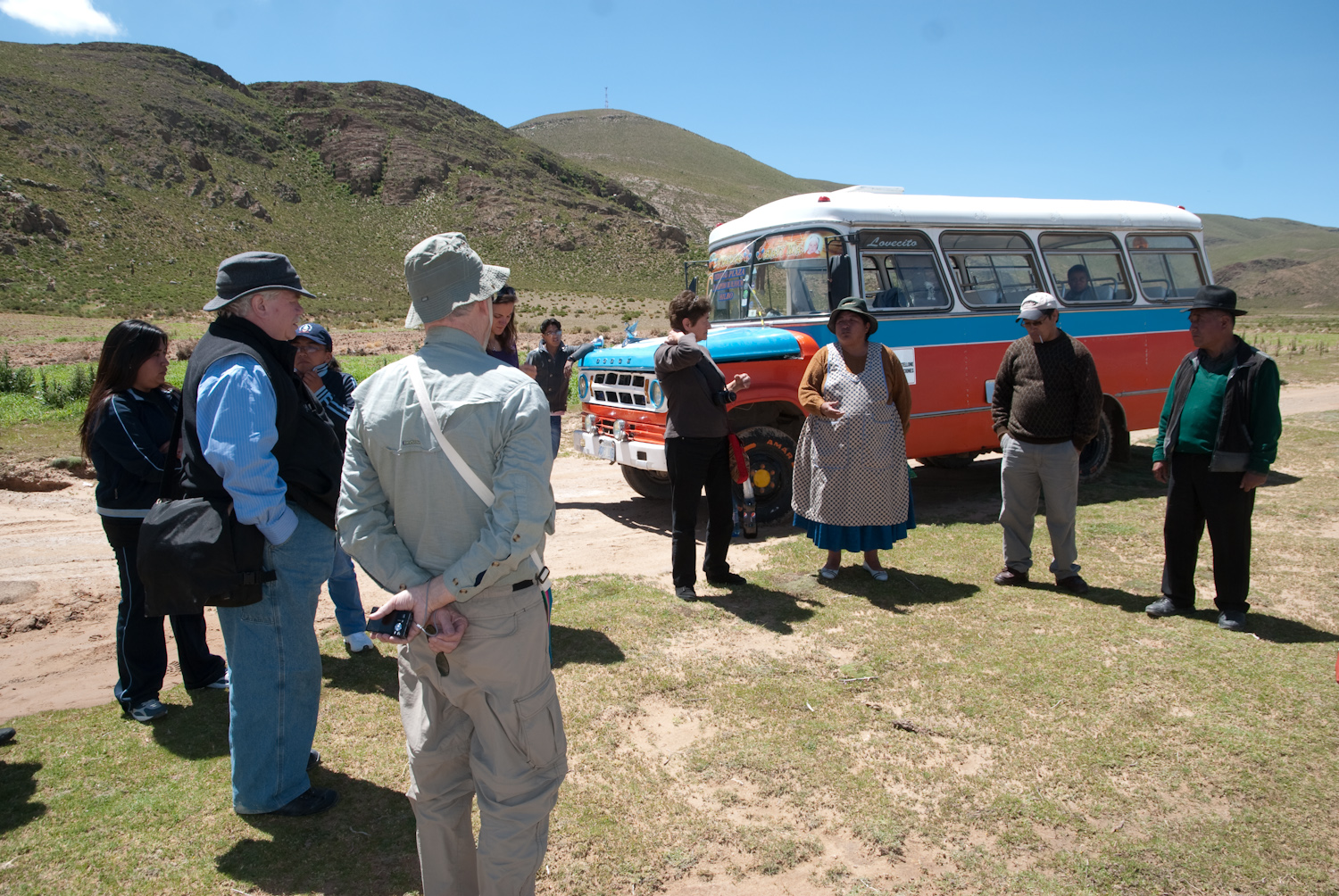
Delegations meeting with CEPA, CORIDUP, AND UMAVIDA. Out beside the lake with indigenous people telling their stories. Photo courtesy of Joining Hands Presbyteries of San Francisco and Cascades.
Two people, one from each partner Presbytery, began work on a UPR draft, in English. The target was 10 pages, appropriate for a joint submission from 3 or more organizations, including CORIDUP. The draft drew on the case study, three model submissions to past UPRs on similar topics, two reports from UN Special Rapporteurs on Human Rights, and the AIDA mining resources website.
The document went through several drafts in Spanish and English, including reviews by attorneys and environmental researchers at AIDA and Earthjustice, with UMAVIDA coordinating with CORIDUP and U.S. partners. CORIDUP leaders and communities were grateful to work hand in hand with US partners and allies, and greatly appreciated this work in solidarity.
CORIDUP submitted the UPR document, in Spanish, with an English version offered as a translation.
Through the UPR submission, CORIDUP recommended that the Bolivian government:
- Enforce obligations according to the laws and signed commitments.
- Search for help from other U.N. members to mitigate and remediate the regions damaged by mining contamination
- Support the populations in exercising their right to live in a healthy environment.
- Conduct ongoing studies or audits of the environmental quality in which the people live, the effects of contamination on environmental health, and especially human health.
- Establish financial bonding requirements for extractive industries sufficient to pay for reclamation.
For these concerns to appear in the final report from the U.N. Human Rights Council, other U.N. member countries must comment on the Bolivia submission, affirming and ratifying the recommendations.
Meanwhile, the CORIDUP communities continue to meet with government authorities, as well as to plan for a health study with UMAVIDA and Dr. Fernando Serrano, a professor of Environmental Health of St Louis University. We continue to take these steps forward, hoping for a long-term and sustainable change for these communities.
Working on the UPR submission forced the Northern partners to understand mining materials at a much deeper level. Putting the environmental harms in a Human Rights context provides a new framework for sharing the story. We realize that for future work on a joint North-South campaign on extractive industries, we need to learn about mining reclamation and water treatment. If the money were available, how much of the damage could be reversed?
UPR dates for Joining Hands countries:
Session 13 2011: India (expect again in 2015)
Session 14 2012: Cameroon, Peru, Sri Lanka (expect again in 2016)
Session 19 2013: Democratic Republic of the Congo (expect again in 2017)
Session 20 2014: Bolivia, El Salvador, Egypt (was due March 15, 2014, expect again in 2018)
Session 26 2016: Haiti
