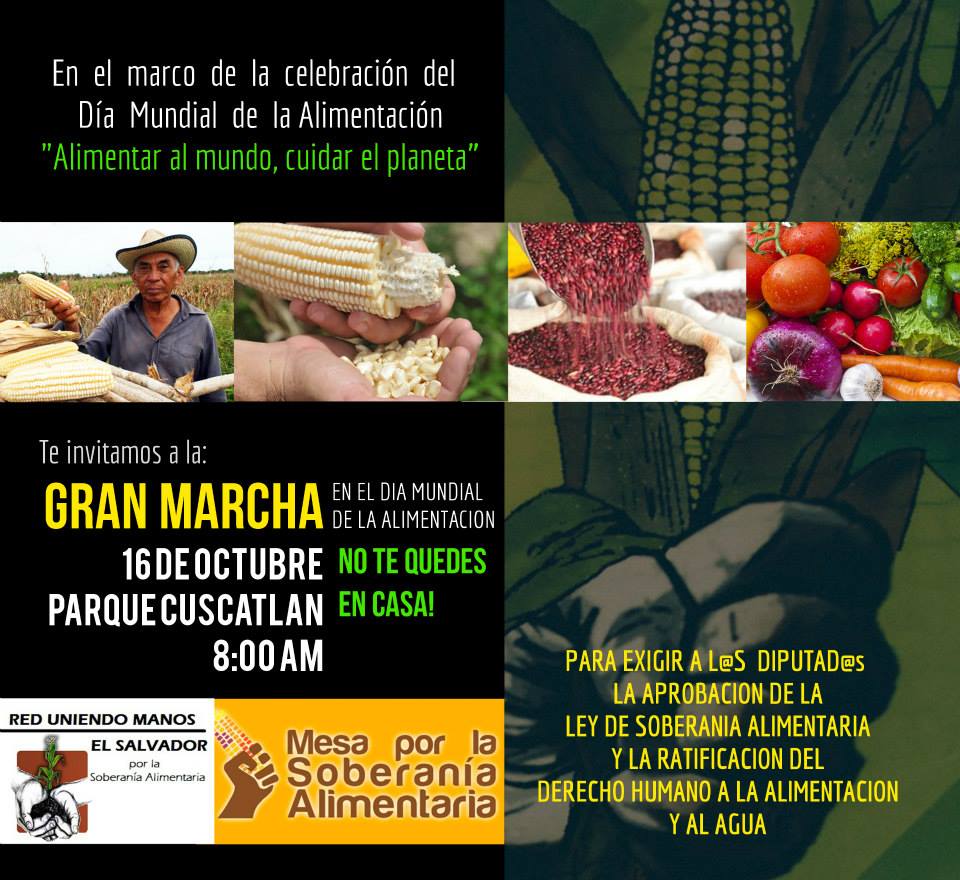


World Food Day
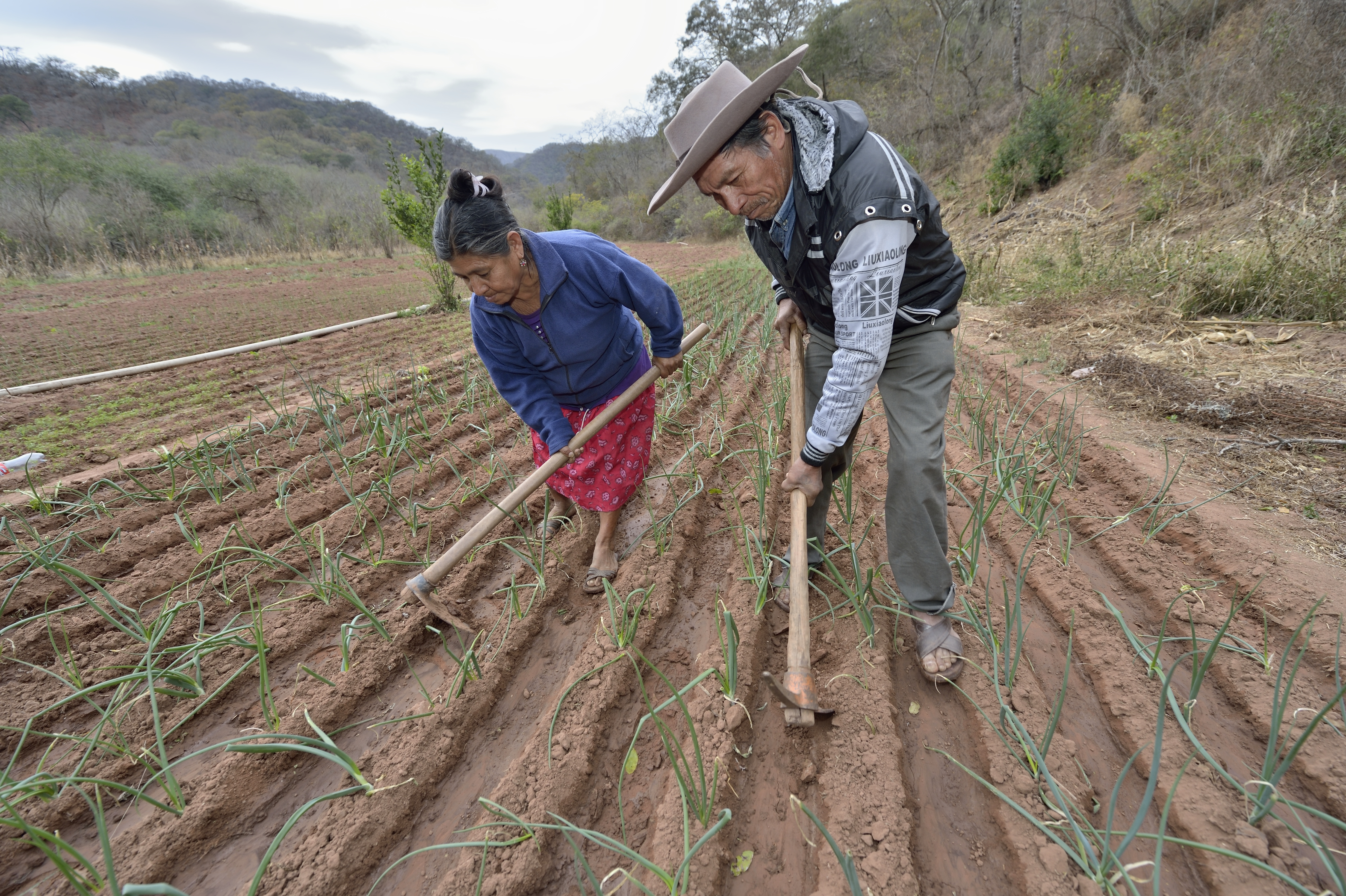
Edulia Vaquera and Gregorio Galarza work together in their garden in the Guarani indigenous village of Kapiguasuti, Bolivia. They and their neighbors started the gardens with assistance from PHP and Church World Service, supplementing their corn-based diet with nutritious vegetables and fruits. Photo Credit: Paul Jeffrey.
As we reflect on World Food Day, on October 16, and beyond, let us remember that more than 842 million people in the world lack the food necessary to be healthy.[i] When more than one in every eight people worldwide goes to sleep hungry, it is clear that the food system is failing people. We must begin to address the health of the global food system if we are going to improve the health and the lives of the people and ecosystems which depend on it.
The 2014 World Food Day theme is “Family Farming: Feeding the World, Caring for the Earth.” According to the FAO,[ii] nearly 90% of the estimated 570 million farms worldwide are family farms, 83% being small farms measuring 2 hectares or less. Smallholder and family farmers serve as the primary preservers of traditional food and seeds, the land and ecosystems, and cultural heritage while contributing to local economies. However, while smallholder and family farmers produce the majority of the world’s food, they now occupy less than 25% of the world’s farmland, and there is evidence that their land holdings are shrinking due in part to the expansion of industrial commodity farms and practices of land grabbing.[iii]
Global efforts to alleviate hunger and poverty should center on strengthening smallholder and family farming; working to improve access to land, loans, education and markets is key to ensuring that smallholder and family farmers have opportunities for overcoming poverty while continuing to sustainably feed the world.[iv]
As Joining Hands, we believe that the world can be fed with good and healthy food, and that new trends like land grab and the privatization of seeds, if not stopped now, will contribute to millions more going hungry in the future. That’s why Joining Hands networks, in solidarity with other global movements, are gathering, and educating the public on systemic causes of hunger while advocating for policies that have the potential to lift millions out of poverty.
From Our Partners
- Gene Chat Poster: A Conversation between a native seed and a GMO
- RUMES' Poster announcing the World Food Day National March for Food Sovereignty in El Salvador
- In Order to Care for the Earth, We Need to Nourish the Spirit
- Strong Family Farms Ensure More than Food Security in Cameroon
- Reflections of a Farmer on the Value of Family Farming
Videos
A Fisher Family: feeding the world, feeding the family through sustainable fishing
Hear from a family fisherman, living on the Kalpitya peninsula in Sri Lanka, as he explains the importance of fishing to his family and community. Family fishing in Kalpitya has been negatively impacted in both the post-tsunami and post-war periods by land grabbing for tourism development. Learn more about the land grabbing in Kalpitya here. Video by NAFSO, a member organization of the Joining Hands network in Sri Lanka Praja Abhilasha.
Family Farming Feeds the World
Family farming is the backbone of agriculture in Cameroon. However, industrial agriculture is now competing for space with family farms. Video by RELUFA, the Joining Hands network in Cameroon.
Climate Change Impacts Food Sovereignty in the Philippines
Economic policies in recent years have worked to increase the dependence of the Philippines on foreign food imports, but climate change is now exacerbating that dependence even further. Gerry Arances, the coordinator of the Philippine Movement for Climate Justice, calls for raising awareness of the impacts of climate change on food on World Food Day.
Snakes and Ladders: Small Farmers and Seed Sovereignty in India
The agrarian crisis in India worsens daily. Access to land, safe agricultural inputs and income security are a dream for many of India’s 700 million rural citizens. Kavitha Kuruganti, a renowned activist in sustainable and holistic farming in India, lays out the problems in agriculture in India and calls on farmers to guard traditional seeds.
Food Week of Action and World Food Day
Sunday, October 12-19; October 16 (World Food Day)
RESILIENCY is the focus for this year’s Food Week of Action. Increasing resiliency brings food security, health and a sustainable future. To get there we pledge to support: food democracy; sustainable, agroecological food production; climate change adaptation; fair wages for food workers; fair prices for farmers; less food waste; policies that promote these goals!
[i] FAO. 2013. “The State of Food Security in the World.”
[ii] FAO. 2014. “What do we really know about the number and distribution of farms and family farms in the world?”
[iii] GRAIN. 2014. “Hungry for land: small farmers feed the world with less than a quarter of all farmland.”
[iv] IFAD. 2014. “The International Year of Family Farming.”